welcome to creating calm chaos. please make yourself at home

Bug Hunt & Nature Journal
Magnifying glasses, muddy knees and the most curious little scientists
EARLY CHILDHOOD ACTIVITIES
6/23/20262 min read

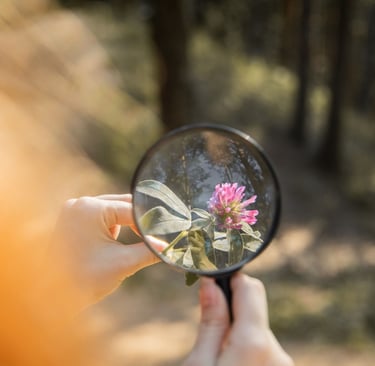
There is nothing quite like watching a child discover their first bug up close - the wide eyes, the cautious finger, the absolute wonder of a tiny creature going about its day in the grass.
A bug hunt with a nature journal is one of those activities that sounds simple and turns into something genuinely magical. It gets children outside, on their knees, paying close attention to the world around them in a way that screens never can. And the journal they create becomes a record of their discoveries that they'll return to again and again.
Why This Activity Works for Kids Aged 4–6
Children at this age are natural scientists - endlessly curious, endlessly observant, and completely unsqueamish about creatures that most adults would rather not touch.
A structured bug hunt with a journal gives that curiosity a focus and teaches early scientific thinking - looking, noticing, recording. Drawing what they find develops observation skills and fine motor control, while the outdoor element supports physical development and connection to the natural world.
Activity Details
Age Range: 4 – 6 years
Time: 45–60 minutes outdoors, then 20 minutes journaling
Mess Level: Muddy! Wear old clothes 🌿
Supervision: Active outdoor supervision
What You'll Need
A small magnifying glass
A bug catcher jar or container with a lid
A simple nature journal - a blank notebook works beautifully
Pencils and coloured pencils for drawing
A bug identification guide or app (optional but wonderful)
Old clothes and boots
How To Do It
Head outside to the garden, a park or any green space.
Give children the magnifying glass and bug catcher and set them loose - under rocks, in soil, under leaves and bark are the best hunting spots.
When a bug is found, look at it closely together - count its legs, notice its colours, watch how it moves.
Carefully transfer to the bug catcher for a closer look before releasing.
Head inside and open the nature journal - draw the bug as accurately as possible.
Write or dictate its name (or make one up!), where it was found, and one interesting thing about it.
Repeat for every discovery - a full journal page for each creature.
Always return bugs gently to where they were found.
Kim's Tips 💕
The best bug hunting is after rain when creatures are more active and closer to the surface.
A simple bug identification guide is a wonderful addition - children love knowing the proper names for things.
If children are squeamish at first, start with butterflies or ladybirds before moving to worms and beetles!
This is a beautiful activity to do with grandchildren on a visit - looking for bugs together is wonderfully connecting and unhurried.
Nature journals make beautiful keepsakes - date every entry.
What You'll Need
Magnifying glasses, bug catcher sets, blank nature journals and field guide books are all on my Amazon storefront.
👉 Shop my Nature & Outdoor picks
More Activities You'll Love
More outdoor and nature activities for 4–6 year olds are at the Creating Calm Chaos Activity Hub.
Disclosure: This post contains Amazon affiliate links. If you purchase through my links I may earn a small commission at no extra cost to you. I only ever share products I genuinely love and use myself. Thank you so much for your support - it means the world! 💕
With love,
Kim xx
Support
Connect
info@creatingcalmchaos.com
© 2026 Creating Calm Chaos. All rights reserved.